Changes on our little Farm

I have a spreadsheet titled “The Plan 2023”. It is supposed to be a well thought out master plan for the next growing season.

Right now the first line says “What the heck am I supposed to do?”

If you had asked me in August what the plan was I could have rattled off a plan pretty similiar to this last season, Farmer’s Market, nice long summer subscription, lots of different annuals. A few smaller changes, for both my mental health and to make more time with my family. Things like a smaller spring subscription, and no Snuck flower share, now that we have their own cut flower garden up and running.

But bigger changes were coming.

For the last three years I have had the beautiful opportunity to grow on a property that was not my own. We call it the sister site, named so for the two wonderful sisters who live there. These two have become dear sweet friends. They have been my cheerleaders, patient and kind no matter how filthy and tired I might be on any given day. It’s been a win-win type of situation. The burden of caring for a large property was reduced for them, an opportunity for me to grow more than I could on my own land, and lots of flowers for all of us to enjoy. Both growing there and getting to know them better has truly been a blessing for me.
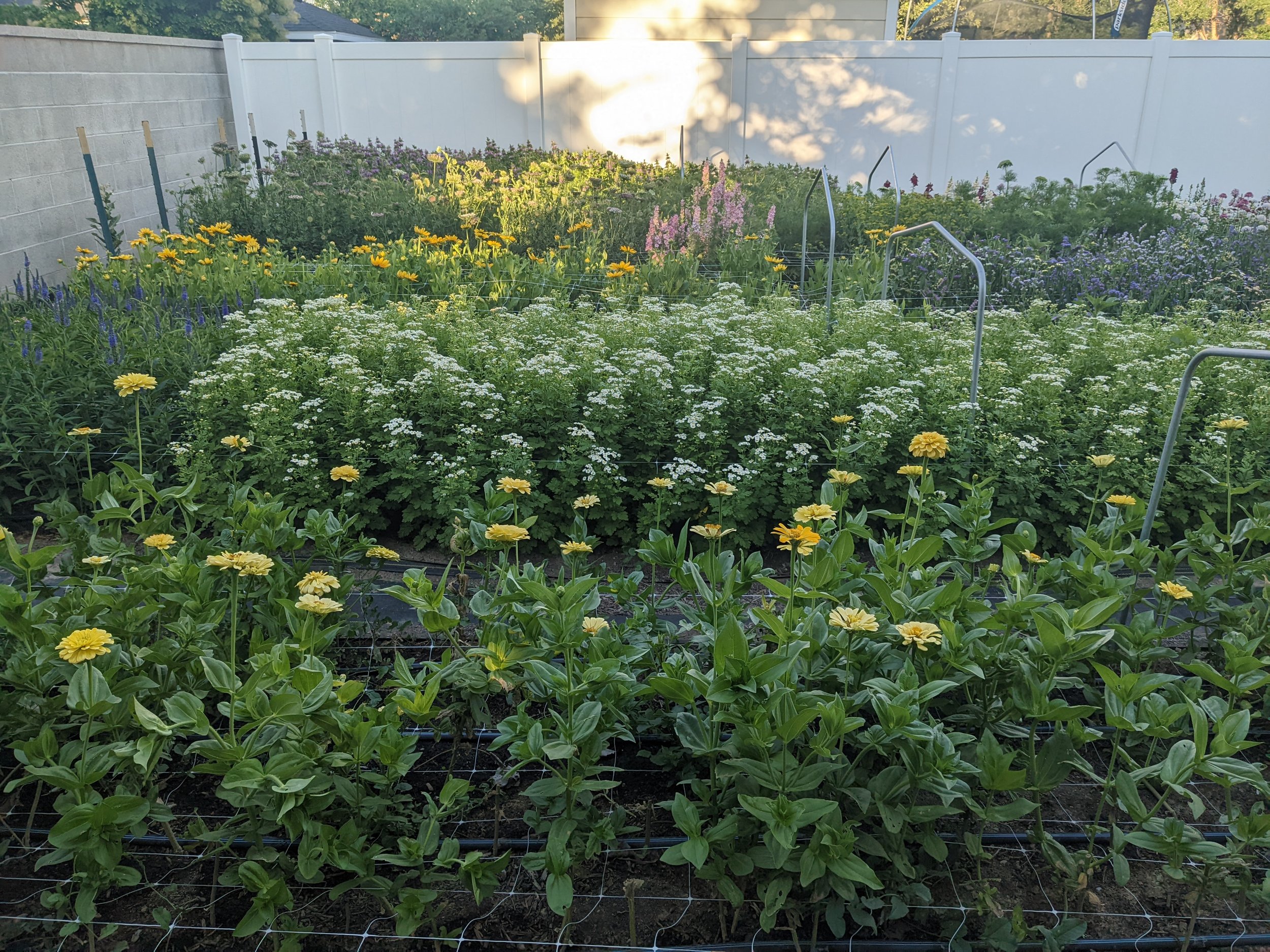
July “22 at the sister site

As life happens, their situation changed in the blink of an eye and by October they informed me that they would need to move and their home would be sold.

I am so grateful for the time I had to farm there, so grateful for their friendship and kindness. It was a lovely three years and I am beyond grateful.

It has been bittersweet as we have cleaned up this fall. We moved a few perennials back to the home farm, and made it as neat and tidy as we could. We have left the infrastructure (drip tape and landscape fabric mostly) till Spring, with the hope that maybe the new owners will be open to keeping us around.

In the meantime, it’s been back to planning. With our growing space reduced by about 60% I ‘ve been thinking about the best way to manage the remaining 40%. Here at our homesite we have a good amount of our space planted in specialty cut flower perennials that bloom in Spring and Fall. Perennials are an investment in time and money and I wanted to focus as much our attention on them as possible. Most seasons we harvest exclusively at our home farm site through the end of June, so it made it (kinda) simple to choose to focus on a new, longer Spring bouquet subscription. It takes time for perennials to establish and I am so glad that we will have so many mature beauties like Peonies, foxgloves, clematis, baptisia, and others to harvest from this spring. We are also growing lots of our favorite bulbs, like daffodils, tulips, ranunculus, allium and anemone. I’m especially glad that we should have enough to attend our favorite market in June for the beginning of the season.

After the spring abundance is over we will switch gears and focus on a smaller planting of some of our late season favorites. Lisianthus and dahlias typically bloom in August and September and will be a beautiful way to wrap up our season. Along with our perennials, dahlias, and lisies we will be looking for every free spot to sneak in a few more annuals like gomphrena, basils, and asters.

Subscription Dahlia bouquets

Change is hard, but sometimes there are silver linings. I am looking forward to our first July off in six years! It will be nice to spend more time with all my teens before they spread their wings and leave home. Time is fleeting and we’ve got to make memories while we can.


6 Gifts for Cut Flower Gardeners

Gift giving can be tricky, especially if you are looking for thoughtful gifts that the receiver will actually use! I thought long and hard about my favorite things as a gardener and I think I have some good ideas for the gardeners in your life. If you happen to be the gardener- feel free to send this post to friends and family that need gift ideas for you, they will appreciate the help I’m sure.

I tried to focus on local and sustainable options, so you will be seeing lots of fun gifts from our home state of Utah on this list. EVERYTHING on this list are things I’ve personally owned or used. I’m not being paid any endorsments, I just really like them.

  1. Amaryllis Gardens from Three Sprouts Flower Farm

It may be freezing outside but you can still get your plant fix. I have had her amaryllis in my home for the last 3 winters and they are stunning. Last year’s amaryllis bloomed for close to 2 months. Once they are done blooming inside you can store them for planting outside.

This amaryllis garden bloomed forever in my kitchen last year.

2. Mom’s Stuff All Purpose Salve and Face Balms

Being outdoors for extended amounts of time can wreak havoc on our skin. I love this stuff, the all purpose salve seriously saves my hands from cracking all winter and the nourishing night face balm soothes my skin when I am sun and wind burnt from working long days on the farm. Made local in small batches here in Utah.

Super soothing after a day in the garden.

3. Snuck Farm’s Backyard Growers Collections

It can be so hard to find locally grown cut flower plants in the spring and not everyone has the space or time to start the seeds themselves. The Backyard Growers collections are curated with varieties that do well here in our climate. There are 3 collections, each collection has 8-9 varieties and include focal flowers, fillers, and foliages. Everything someone would need to have a well rounded, beautiful cut flower garden perfectly planned out for you.

Carefully selected cut flower seedlings ready for your garden in Spring.

4. Johnny’s Selected Seeds Gift Certificate

This isn’t a Utah company but it is a an employee owned, American company. What I love about Johnny’s is that they carry the tried and true varieties that are guaranteed to grow well. The seed packets themselves are a wealth of knowledge, making it easier on both new and experienced seed starters. They’ve got some great tools too.

Johnny’s Selected Seeds

5. The Backyard Cut Flower Garden Course

For those of you that like to gift experiences this one is for you. A collaboration between Snuck Farm and my farm, this 5 month course covers all the basics of growing cut flowers and then some. The best way to learn any skill is by having the opportunity to learn it hands on. The course is held at the beautiful Snuck Farm in Pleasant Grove. Each participant has their own 30 foot growing space to practise the methods taught and all plants, seeds, and materials are included. The best part is the buckets of blooms that you will harvest through out the season. Teaching this course is one of my very favorite things, reach out with any questions you have.

Bouquet making class during the Backyard Cut Flower Garden Course.

6. Corona Long Straight Snips

Pretty much the only tool used to harvest flowers on my farm. These stainless steel snips last well and stay sharp. I have a pair that is at least 7 years old and it works as well as the day I bought it. Use them for harvesting flowers and herbs, pinching plants, and dividing dahlias. We keep a whole bucketful on hand so every employee has one to use.

My favorite snips!

There you go! Hope this list of my favorite gardening gifts was helpful. Happy Holidays!

"What would you plant?" -Warm Season Edition

Last January I had the chance to present at the Utah Farm and Food Conference. As we wrapped up our session someone asked for a list of the ten flowers I would grow if I were starting a farm or cutting garden for the first time. What a fun question! I love variety and grow way too many types of flowers on our farm, so it was challenging to narrow it down to just 10. You can check out my recomendations for cool season varieties here and my favorite starter perennials here.

Today I wanted to share my favorite warm season flowers for first time cut flower growers. Warm season flowers are those that grow during the frost free days of the year. Plant them after any threat of frost has passed in your area. Here in the Salt Lake valley we plant these varieties around Mother’s day, with another succession (second planting) about a month later.

Sunflowers. These classic summer flowers are so happy and cheerful and easy to grow! Place a seed about an inch deep in the soil, gently cover, water it in and wait. Sunflowers are also one of the fastest crops we grow, usually taking about 50-70 days to bloom depending on the variety.

Top Tips-

  • Sunflower size can be controlled by how far apart you plant your seeds. I plant mine about 4-6 inches apart in a grid for perfect bouquet sized blooms

  • Look for varieties that are “pollenless” or “pollen free”, these are bred for cut flowers and won’t make a mess on your table cloth, or your customers table cloth if you are growing for others.

  • My favorite selections are Vincent’s Choice, Procut Plum, and Procut White Nite

  • If you choose a branching type, make sure to give them a little more space, about 12 inches, and pinch them when they are 6-12 inches tall.

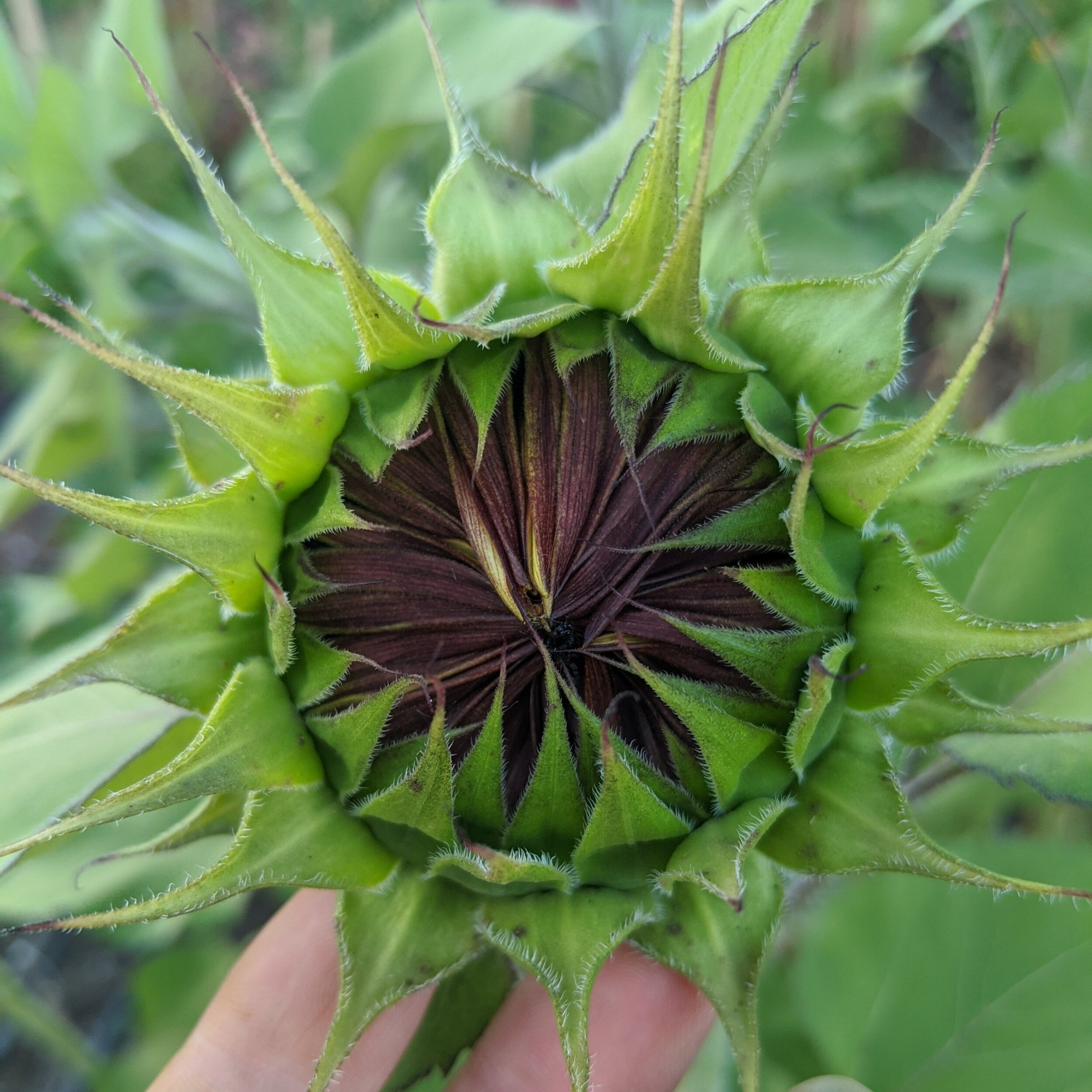
  • Cut just as the first petal begins to lift off the center disk for longest vase life.

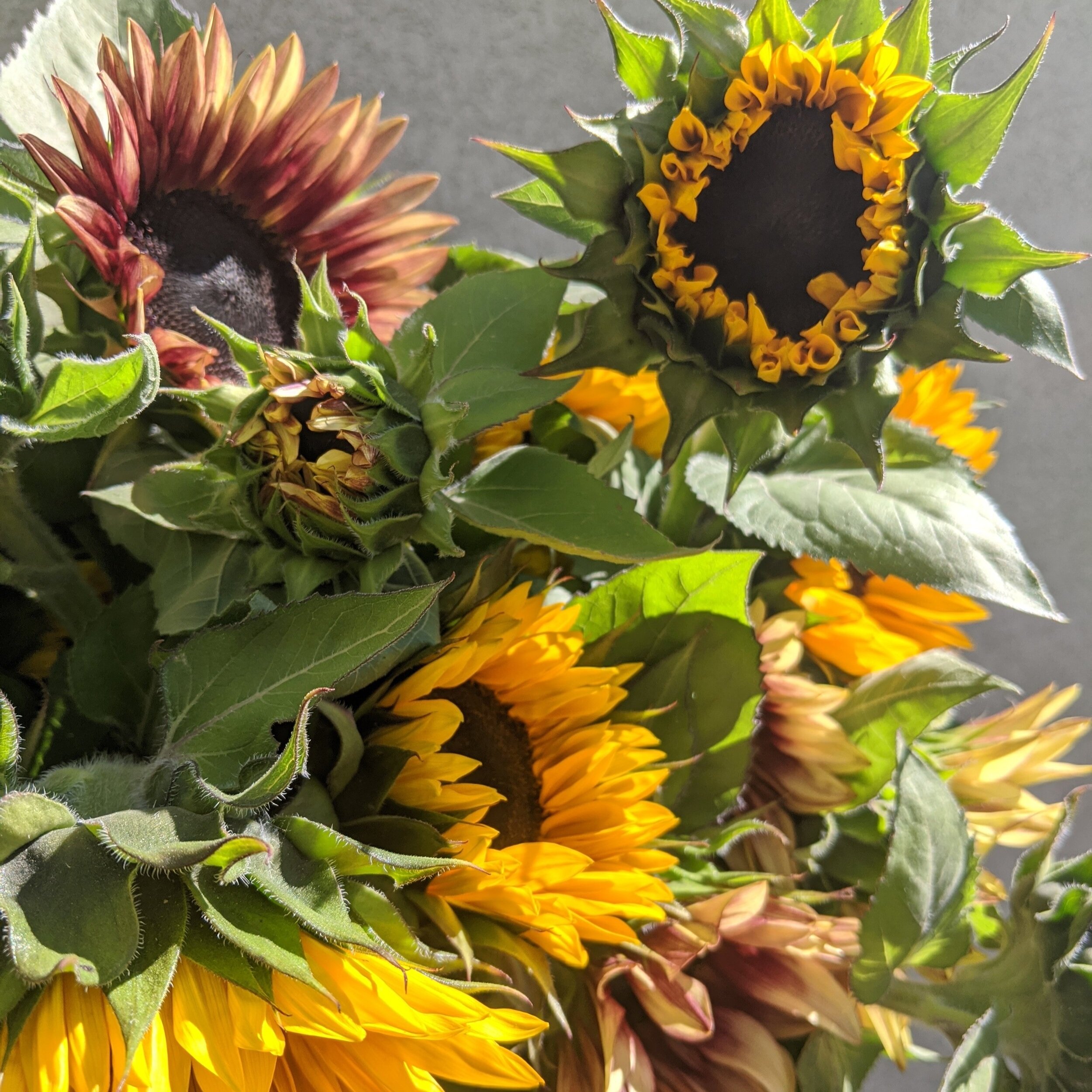
From left to right: Sunflowers Procut Plum and Vincent’s Choice, Procut Plum sunflower at correct harvest stage.


Cosmos. If you are interested in the wildflower look, these sweet flowers are for you. Simple to grow, they can be planted directly in the ground or started inside. Cosmos come mostly in white and various shades of pink, although there are a handful of apricot, and citrus colored varieties.

Top tips-

  • Pinch them when they are about 6-12 inches tall

  • Cut them when the largest bud is just begining to open, the other buds will soon open as well. Make your cut deep into the plant, so that later stems will be long.

  • You can use the foliage as greenery in your bouquets!

  • Cosmos are kind like zucchini, super productive and quick to get past their ideal stage. Plant less than you think you need for your first go round.

  • Cosmos are very prone to powdery mildew. Its always the first plant to get it on my farm. Be prepared to treat it if powdery mildew is a problem in your garden.

  • I love the varieties Double Click and Sea Shell for their uniqueness.

Double click cosmos at stage of harvest


Basil. I know, I know, you must be thinking “But that’s an herb, not a cut flower!” Basil makes a fabulous and easy to grow foliage for your bouquets. It’s quick growing and loves the heat. And you can eat the left overs!!

Top Tips-

  • Choose your varieties carefully. Smaller leafed and tall cultivars work best. My favorites to grow are Mrs. Burn’s Lemon, Cinnamon, and Siam Queen Thai Basils.

  • Unlike growing basils for flavoring food, we want to let the basil bloom. Harvest when the basil is tall enough and a few of the florets have begun to bloom.

  • Basil can sometime be a little wilty. Harvest in the cool of the morning or later evening. Let it sit overnight in bucket, in a cool (not too cold) room. This will allow it to fill it’s cell walls with water and resist wilting. Stripping lower leaves off the stem will also help the remaining leaves hydrate better.

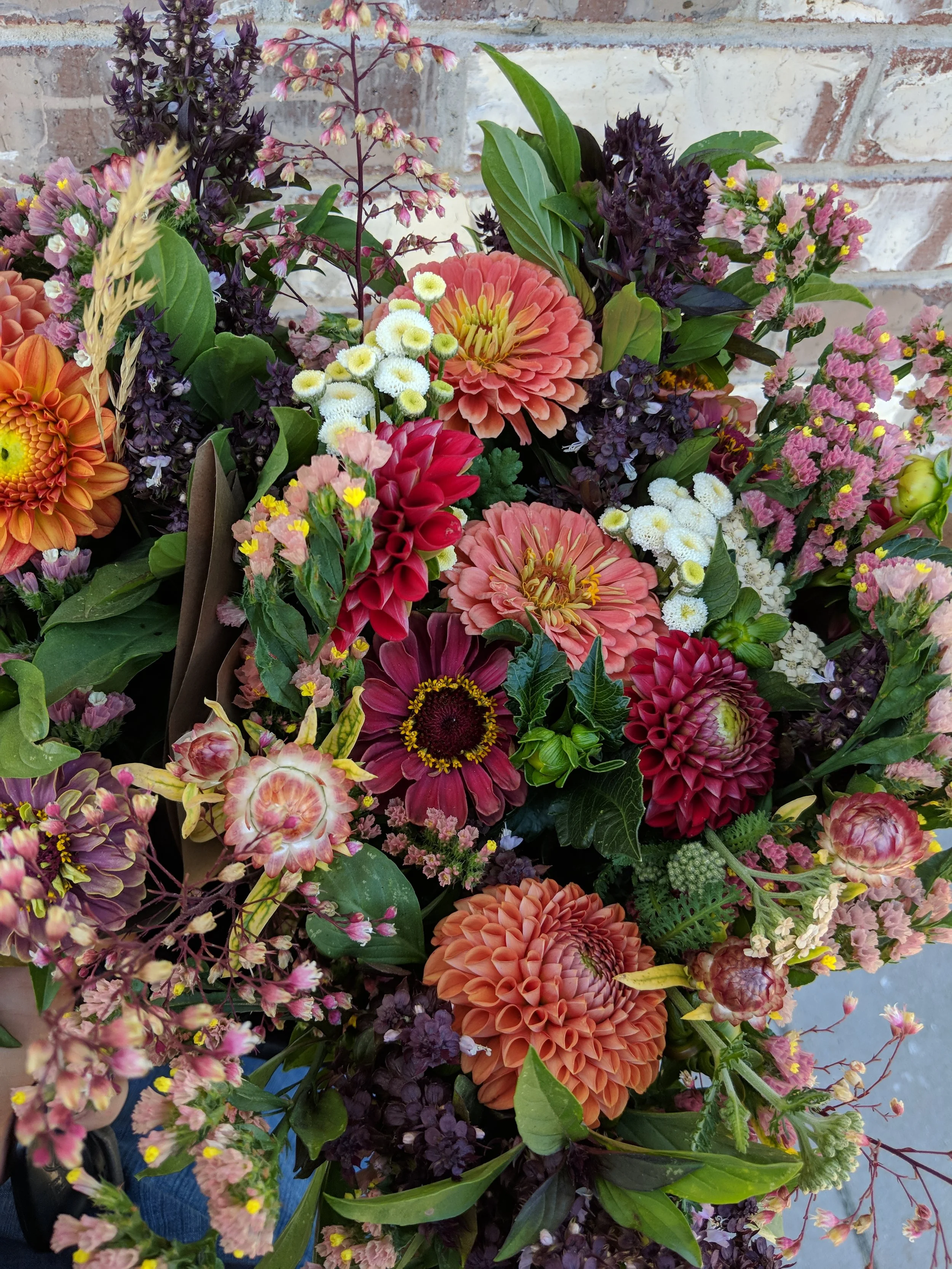
Fall bouquets featuring the dark and heavenly scented florets of Siam Queen Basil.


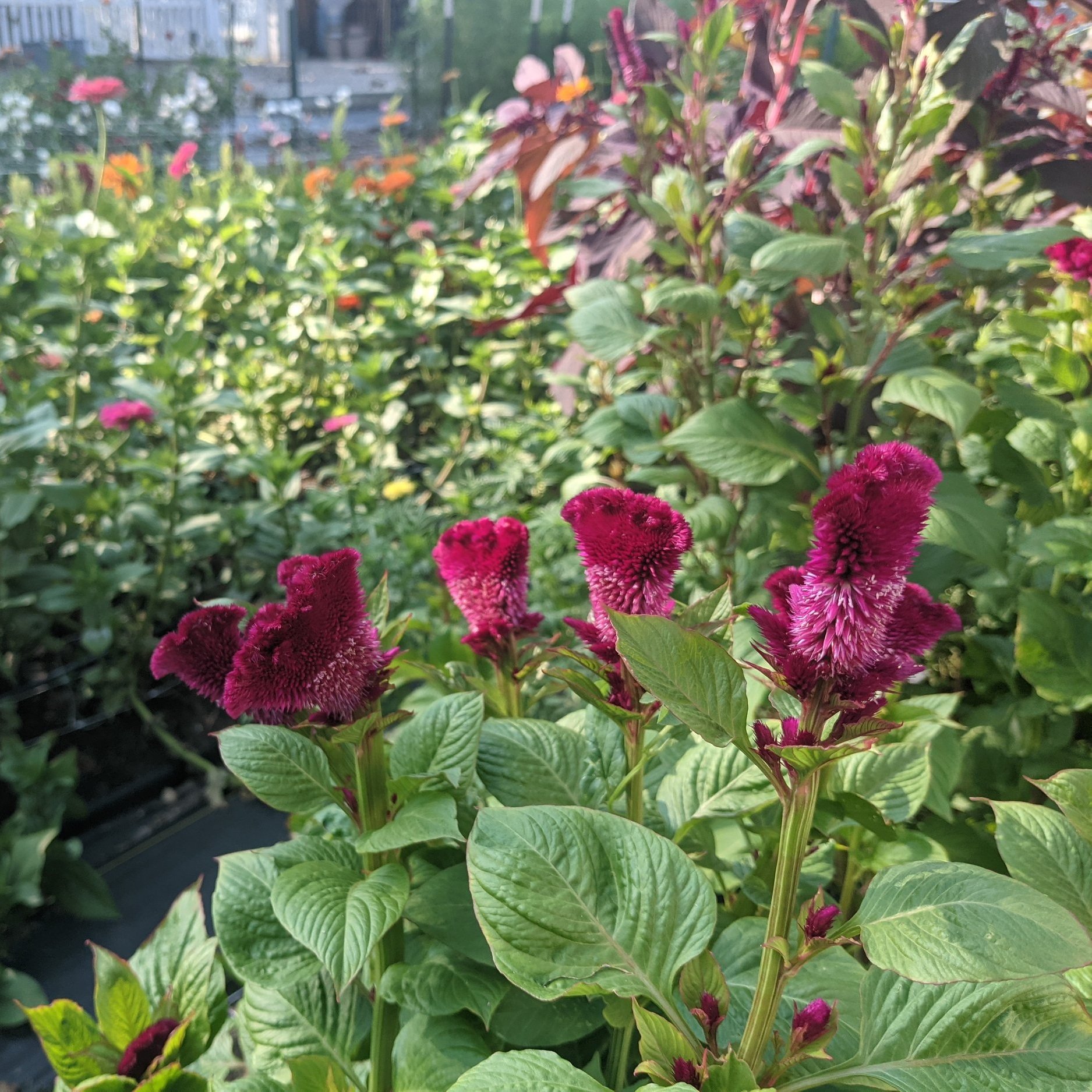
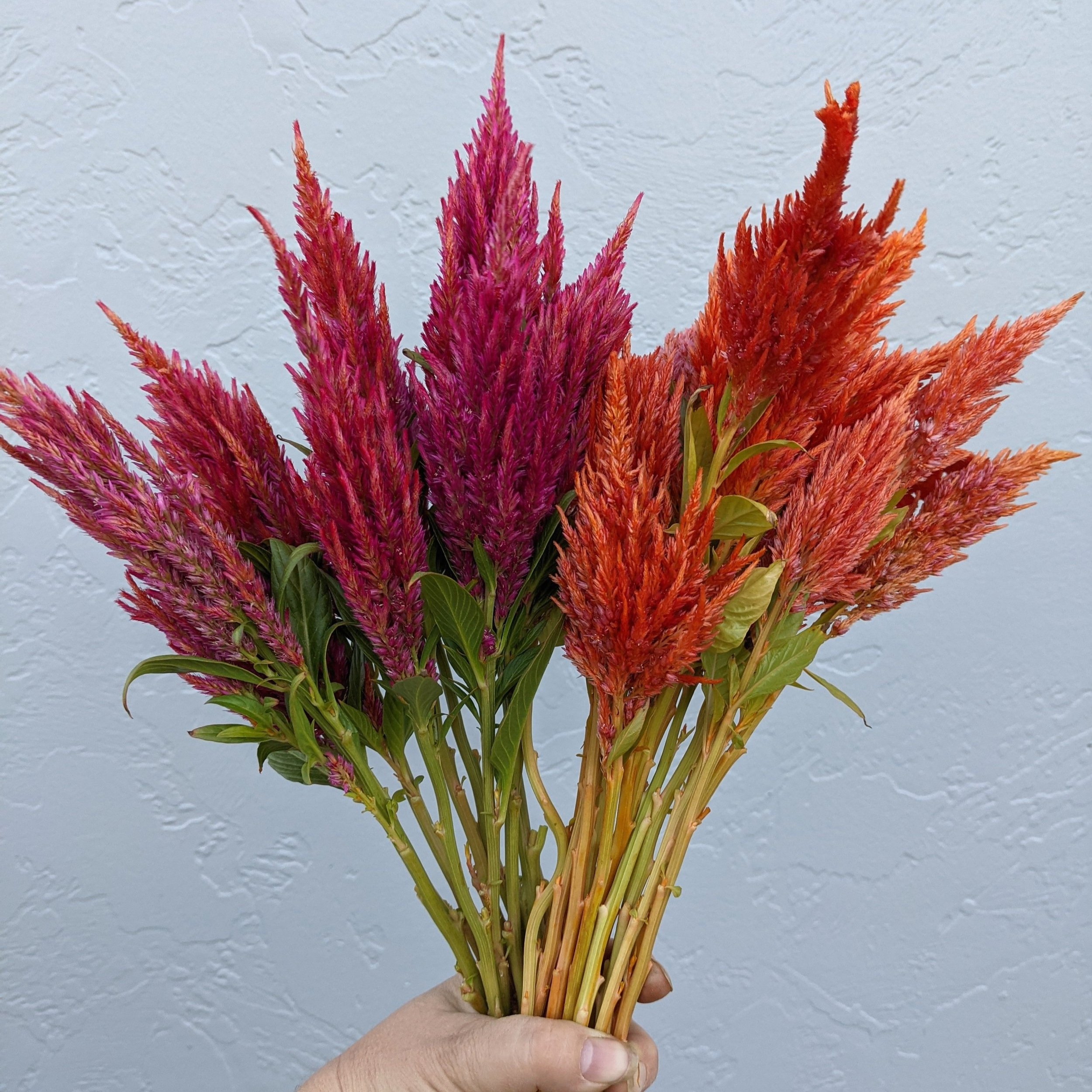
Celosia. This last season was the season of celosia on our farm. It was so lush and beautiful. Celosia comes in a vast array of shapes, textures, and colors. It’s a unique group of flowers that can stand up against our heat filled summers here in Utah.

Top Tips-

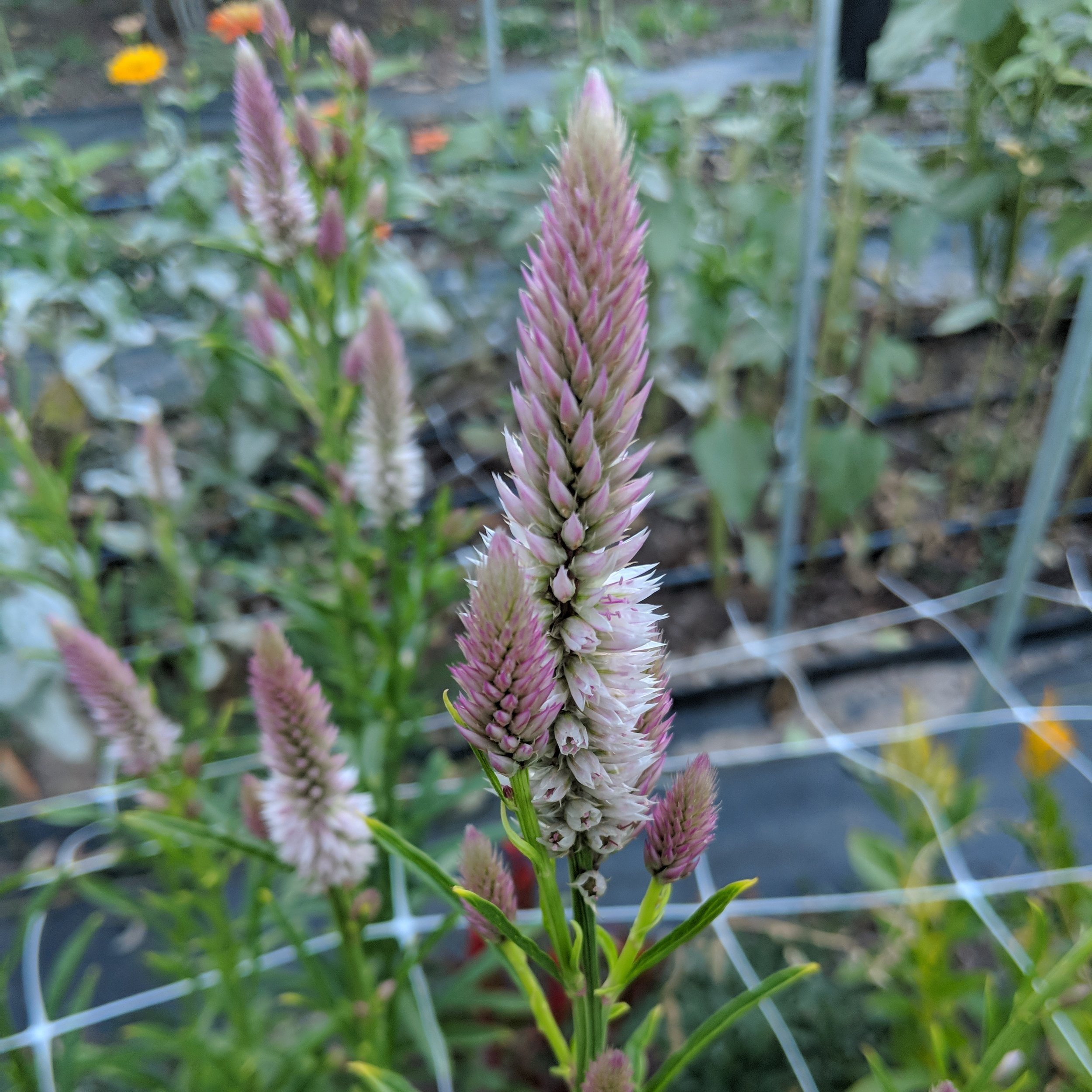
  • Get to know your celosias. There are crested celosia, a.k.a. cockscomb celosia or celosia cristata. Their texture is fun and velvety, the shape they grow in reminds me of ocean coral. Wheat celosia or celosia spicata bears narrow spikes of color that resembles, you guessed it, wheat. Celosia plumosa sends up feathery plumes of tiny florets.

  • Both plumed and wheat celosia are great upright linear additions to bouquets and arrangements. Crested celosia adds a fun texture and a talking point. For Wheat type my pick is Flamingo Feather. The plumed varieties of the Sunday series, especially Orange and Dark Pink, are winners, as is Sylphid, an icy lemonade yellow that blends with both brights and pastels. For crested varieties, I love Cramer’s Burgundy and the Chief series, specifically rose and persimmon.

  • Celosia is best started indoors on a heat mat. Besides needing to be started indoors, celosia is a very easy crop to grow. I have not seen any pests or diseases on celosia on our farm.

  • Pinch celosia when it is about 6-8 inches tall for consistently sized stems. Pinching is especially important for crested varieties that will bloom on multiple stems. Do not pinch any varieties that has “single stem” in it’s description, you’ll pinch off it’s one bloom.

  • Celosia will bloom in less than ideal circumstances, but for best blooms give it full sun and consistant water.

  • Harvest when the blooms have reached the size you desire but before the seeds ripen.

From left to right, Celosia Flamingo Feather, Celosia Cramer’s Burgundy, Celosia Sunday Dark Pink and Orange.


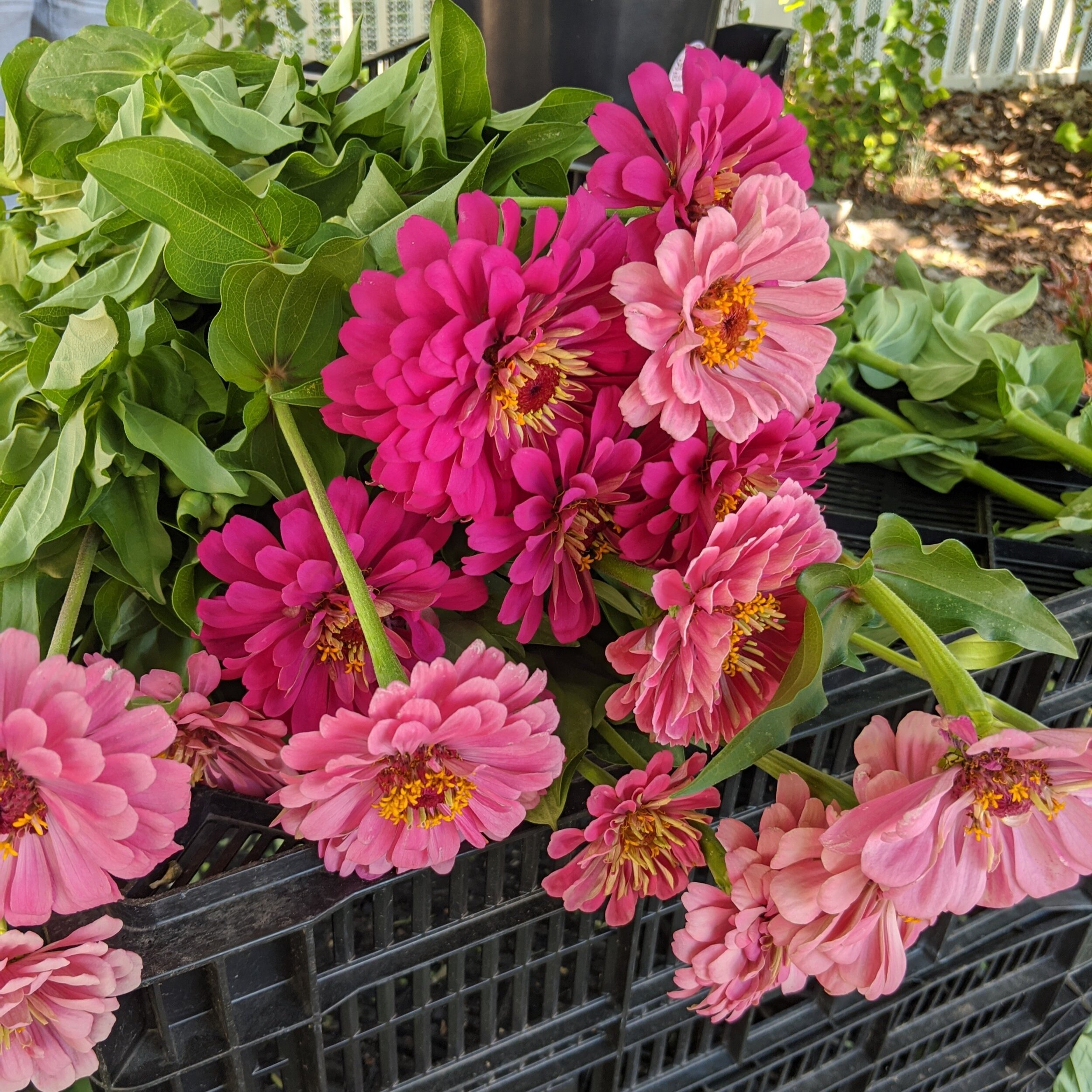
Zinnia. You might have been able to guess which flower would be the last of our top five, zinnias are a no-brainer for any cut flower garden. Big, bright, and beautiful, they are easy to grow from seed and bloom over a long season.

Top Tips-

  • Zinnias can be started directly in the ground outside or indoors to get a little head start.

  • Zinnias cannot be shipped, making them a flower unique to locally grown markets.

  • Harvest when flowers have fully opened and the stem right below the flower head has become firm. Do the wiggle test- gently grasp the stem 8-10 down from the bloom and give slight shake, if the flower stem is stiff all the way to the top it is ready to cut.

  • Cut deep, especially your first cut on a plant. I cut down to the bottom 3 or 4 branches on the plant. This will insure nice long stems for future harvests. Trim off any foliage or side buds for longest vase life.

  • Watch for powdery mildew, treating it sooner than later can protect your crop for the long haul.

  • Be careful with herbicides, zinnia are super sensitive to herbicide drift. Even a neighbor spraying weeds from 20 feet away can affect them.

  • Varieties to try - Any of the Benary’s giants, my favorite colors are the salmon rose, deep red, orange, and bright pink. Uproar Rose is disease resistant and super productive, the blooms are always large and uniform. The Queen series can be a fun novelty.

From left to right, Uproar rose and Benary’s Giant Bright Pink, Benary’s Giant Salmon Rose, Zinnia leaves affected by herbicide drift.


There you go, my top five warm season varieties to start your cutting garden with. Which will you try this year?