What would you plant? - Perennial Edition

Last weekend at the Utah Food and Farm Conference I was asked during my talk to name my top ten cut flowers for beginning flower farmers or cut flower gardeners. I thought it would be fun to answer that same question here, only I plan on sharing my top fifteen. Yay!! Five extra flowers to talk about!

Let’s start with my favorite perennials for cutting gardens, shall we? Often people want to start with annuals, but perennials provide a great backbone to your cut flower garden. And because they take a little while longer to get established it’s a good idea to get them planted sooner than later. Keep in mind there are lots more perennials that make great cut flowers, but these particular cultivars are ones I can’t imagine not growing.

1. Rudbeckia hirta Prairie Sun

This gloriously happy flower is like pure sunshine in a bouquet. Easy to start from seed, it produces blooms from June to September in northern Utah. I love it arrangements with snapdragons and feverfew.

Rudbeckia “Prairie Sun”

Rudbeckia “Prairie Sun”

2. Scabiosa “Fama White and Fama Blue”

Also know as pincushion flower, this is often the first perennial to really getting going and will keep going till frost. Available in blue (a cooler lavender-blue) and white. These sweet blossoms can be seed grown or found at local nurseries.
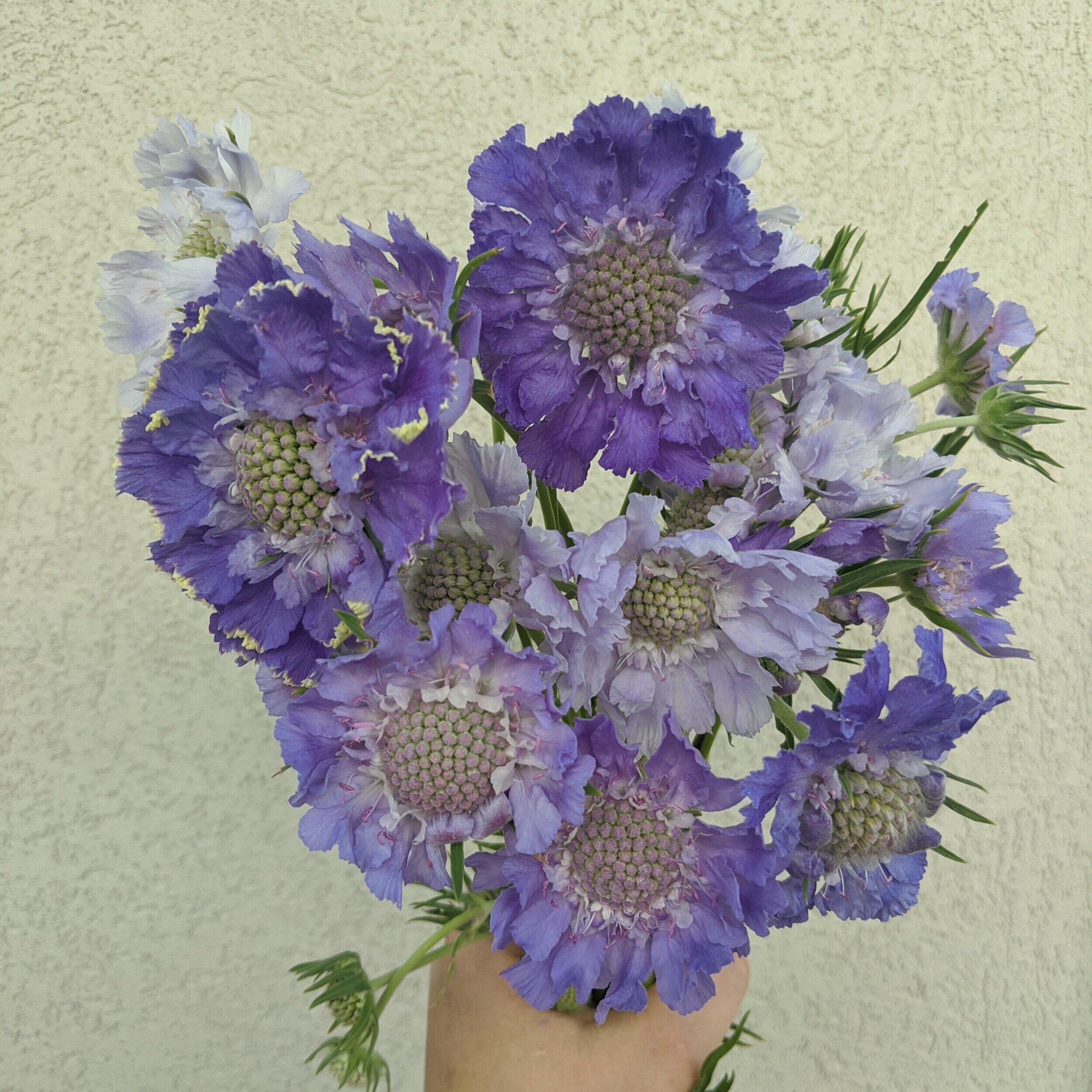
Scabiosa “Fama Blue”

Scabiosa “Fama Blue”

3. Peonies

No matter how you pronounce it, peonies are really the queen of the cut flower garden. These beautiful focal flowers fill a void in late spring. Double petaled varieties typically last longer in a vase than single or semi-double varieties. You can’t go wrong with Coral Sunset, Duchesse De Nemours, Shirley Temple, and Sarah Bernhardt for cut flower gardens.
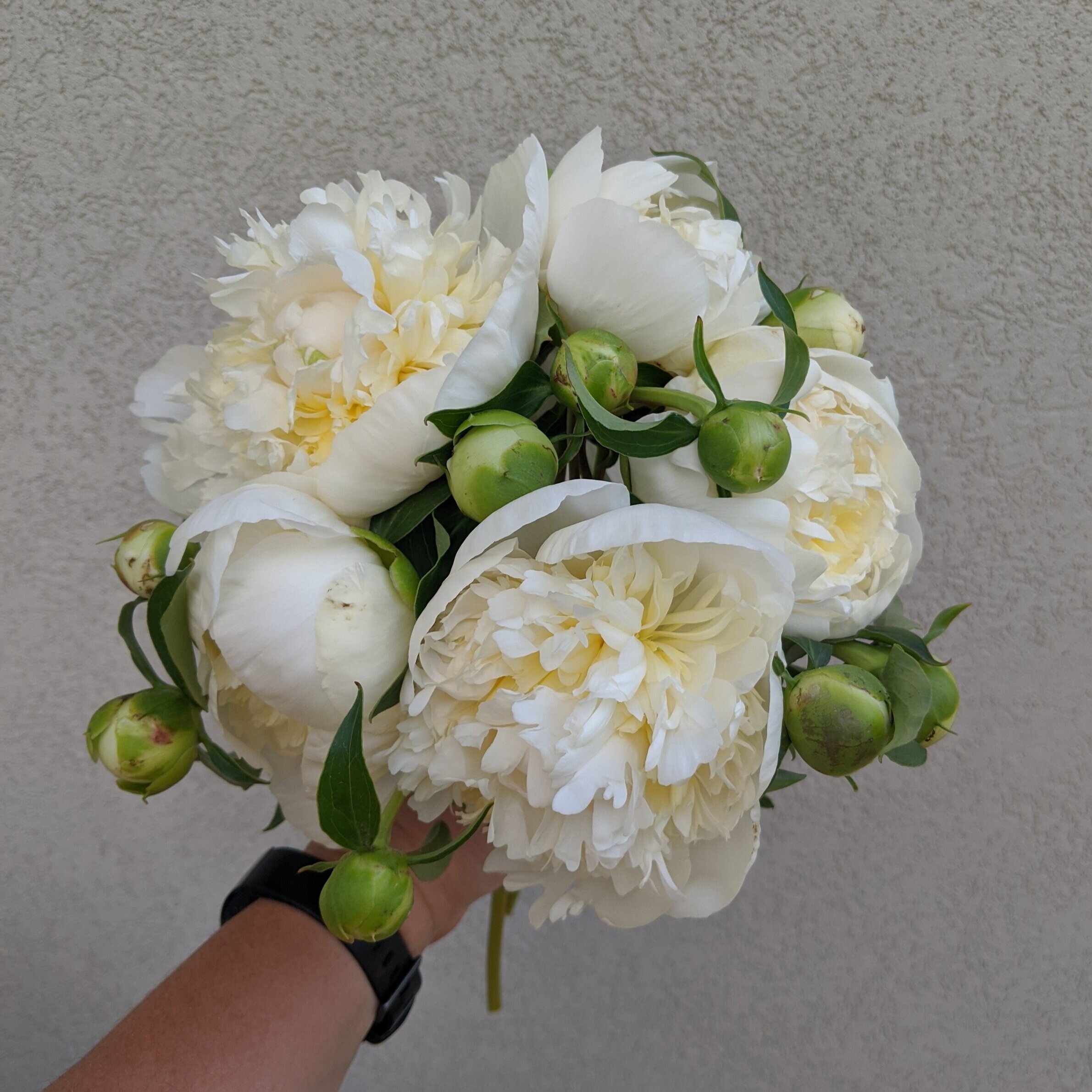
Paeonia “Duchesse De Nemours”

Paeonia “Duchesse De Nemours”

4. Solidago “Golden Baby”

I l.o.v.e. goldenrod! It’s the little magic touch that gives every bouquet a bit of sparkle. The variety Golden Baby is a winner because you can start it from seed and it tends to be more well behaved than other solidagos. It blooms and reblooms June till frost.

Solidago “Golden Baby”

Solidago “Golden Baby”

5. Sedum “Autumn Joy”

Sedums make great cut flowers, sometimes even rooting in the vase. The trick is to make sure you choose tall cultivars, at least 18 inches in height. Autumn Joy is plenty tall enough and a beautiful pink that works well with bright summer colors and the richer shades of fall.

Sedum “Autumn Joy”

Sedum “Autumn Joy”

A little bonus note on Foliage

There are lots of greenery you may already be growing in your yard. If it looks like something that would look good in a vase, clip it and bring it inside to test. Some foliages I like to use are raspberry leaves, mint, bee balm, and lady’s mantle.

A bucketful of raspberry, ladies mantle, and bee balm foliage.

A bucketful of raspberry, ladies mantle, and bee balm foliage.

Hope you enjoy this little list of some of the best perennial cut flowers. Catch my warm season list here and my cool season list here.

Growing Raspberries Made Easy (Or At Least Easier!)

We love raspberries at our house. A lot. They might be our all-time favorite crop. We had a beautiful little patch at our last house and in our current yard we have a 60-foot-long patch of four different varieties. It’s raspberry heaven around here every late summer.

But it took us three tries before we managed to get them to grow.  I mean, they are practically weeds for most people, but we totally killed them the first two times we tried.  So frustrating!   Not ones to give up when there are delicious berries involved, I studied up and we planted again. Finally, success!  Since then we’ve had a number of friends come to us for tips on growing berries and I thought I would share those tips here with you.

1.       Plant at the right time- Early Spring is the best time to plant berries.  They aren’t affected by snow or cold, in fact they do better if they can get established before temps start to soar in the summer.

2.       Plant in the right place- Ideally you would prep your site in fall, so it would already to pop in the plants in Spring.  Raspberries like well drained, weed free soil and at least a half-day of sunlight. Avoid spots where you’ve already had raspberries, strawberries, tomatoes, potatoes, eggplants, or peppers. These plants might have left evil pathogens behind that would harm your new plants.

3.       Plant bare root berries- You can find the widest variety of raspberries bareroot and they settle in faster. Bareroots are usually less expensive, too! And buy them certified disease free from a nursery, don’t be tempted to get them from a neighbor, they could have diseases.

4.       Plant fall bearing raspberries, for easiest care. Also called primocane or everbearing, they fruit on the newest canes each year (and if those canes are left, will fruit again the following summer). So easy to prune, you can just cut all the canes down to the ground in either late fall or early spring. You can have a crop of raspberries the very first year of planting. Yay for not having to wait for two years like you would with summer bearing raspberries.

5.     Plant them right- Soak your bare root plants for about an hour before planting. Space the canes 18-24 inches apart. Most bare root are shaped like an L, dig a trench for the bottom of the L, you want to make sure topmost roots on the plant are covered by about an half inch of soil. Firm the soil really well and water in.  Berries do best with adequate irrigation, we love having ours on drip lines.

Ripe Double Gold Raspberries, such pretty and delicious berry.

Ripe Double Gold Raspberries, such pretty and delicious berry.

Those 5 tips, in my opinion, are the most important when establishing a new raspberry patch. Now for a couple of fun bonus ideas!

                *Have fun with the varieties you choose. You can get regular old red raspberries at the store, so plant something harder to get like yellow or pink berries. We have Anne, a yellow, and Double Gold, a pink champagne color, and love them both.

                *Find a berry patch nearby and go try the different varieties. Find your favorite and order those. That is how we found our two favorite red varieties, Caroline, sweet with a bit of tartness and Joan J, a thorn less raspberry. Just thinking about them is making my mouth water!

                *Since this a flower farm blog, I should tell you that raspberry greens are a fabulous cut foliage for arrangements. Even the immature berries are pretty mixed with flowers in a vase. It’s one of my favorite greeneries to add to bouquets.

Raspberry foliage and summer blooms.

Raspberry foliage and summer blooms.

I hope these tips help you find success growing raspberries so that you can look forward to summers bursting with deliciousness!

Gift Ideas for Flower Lovers and Gardeners

It never fails, every Christmas, the Hubs and I start the same conversation-

Me: What do you want for Christmas?

Him: Hmmm, I dunno, what do you want?

Me: Ahhh, I’m not sure…

Ever happen at your house? Well, hopefully, this list will give you some ideas for that flower lover or gardener in your life, or maybe some ideas to add to your own list for Santa.

1. A Special Vase- A beautiful bouquet of flowers deserves a beautiful vessel. I personally love opaque vases because they give you a chance to hide floral frogs or chicken wire, those sneaky little bits of help that give you a hand arranging blooms just so. A classic white pitcher is always a win.

Spring lilacs in a classic white pitcher.

Spring lilacs in a classic white pitcher.

2. Winter is for Reading- Is there anything better than curling up in the middle of winter with a gardening book and dreaming of the Spring to come? Sounds like heaven to me.

A couple of great reads that are perfectly gift worthy-

Vegetables Love Flowers by Lisa Mason Ziegler is a wonderfully insightful book about growing both food and flowers hand in hand with nature. One of my all-time favorite books.

Floret Farm’s Cut Flower Garden By Erin Benzakein tells all about starting your own cut flower garden, with lots of beautiful arranging inspiration. So pretty!

Color Me Floral: Stunning Monochromatic Arrangements for Every Season by Kiana Underwood is a gorgeous inspiration for every flower arranger, novice or expert.

3. A DIY Floral Arranging kit- Martha Stewart strikes again with a simple tutorial for putting together a kit with everything you need to make a beautiful arrangement.

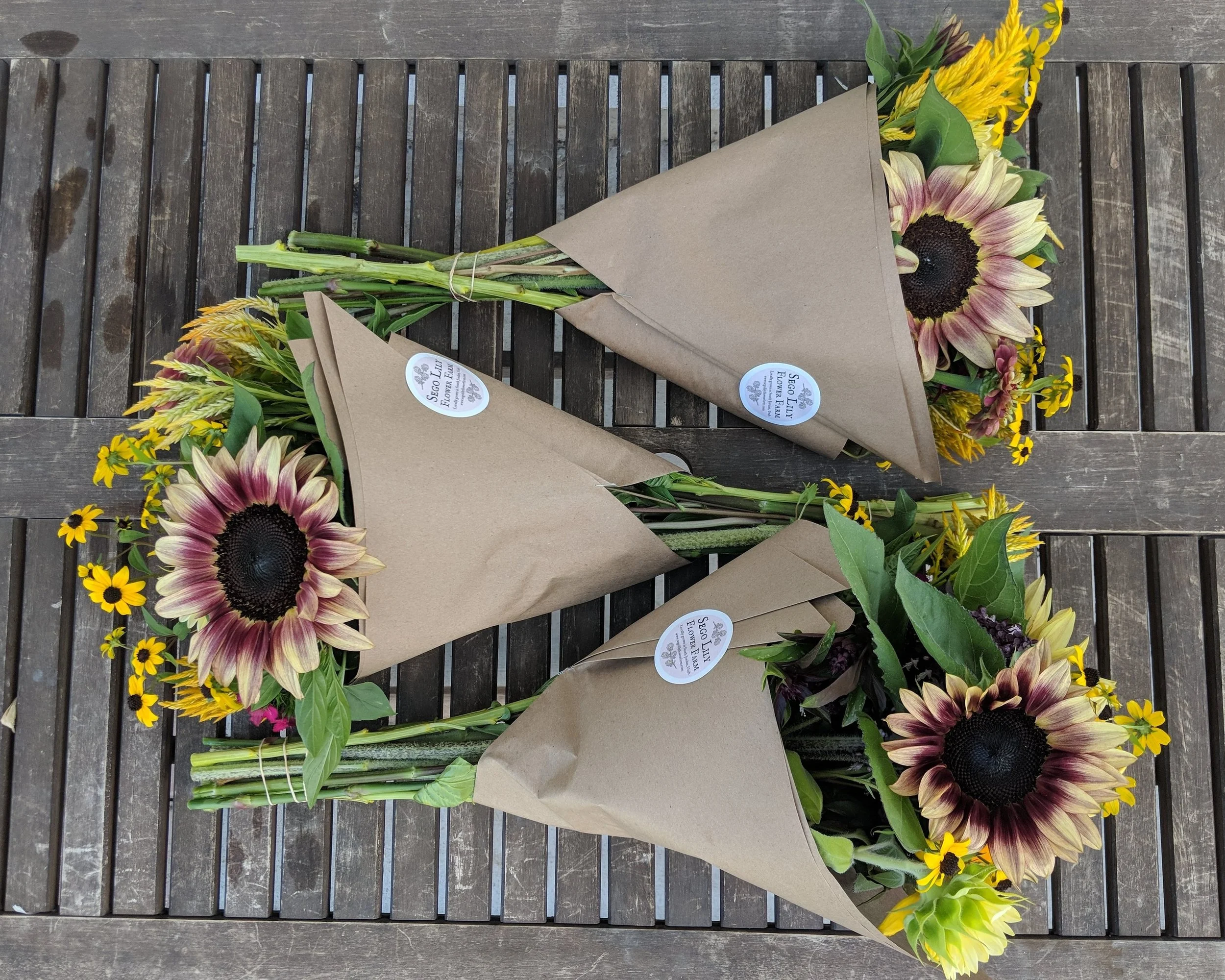
4. A Sego Lily Flower Farm Bouquet Subscription- I am undoubtedly biased, but this might be my favorite option on our list. Who wouldn’t love receiving a ever changing parade of flower bouquets all season? Starting in June with snapdragons and bell flowers, and ending in September with Dahlias and sunflowers, our bouquet subscriptions are a gift that keeps giving all season long.

Late summer subscription bouquets.

Late summer subscription bouquets.

5. A Gardener’s Journal- Gardeners are notorious for trying new things, a new variety here, an experiment there. Having a place to jot down notes can make remembering details from year to year much easier. It can be as simple as a pretty notebook or something more detailed like this five year Record Book.

6. A Gift Certificate to Their Favorite Plant Place- Let’s be honest, one of the most fun things about gardening is finding a gorgeous new plant or seeds to grow. A certificate to their favorite nursery, online or local, is just the ticket.

7. A Gift of Time and Labor- Sometimes the best gift is one you cannot buy. I’ve watched as my neighbor’s children have given her their time and labor over the years. They’ve accomplished marvelous things in her garden, building a garden she couldn’t have created alone. My own sweet husband gave me his Labor Day this last September, working with me to build an arbor to grace our garden. I couldn’t have done it alone, but together we built a beautiful thing.

IMG_20181010_122438.jpg